Mass2035
← All ten goals

DRAFT

A major work in progress.

This vision is still taking shape. Ideas, plans, and teams will evolve.

Massachusetts 2035 · 03 / 10

Jobs

A meaningful, well-paying job

The moonshot

Build the World Capital of Atoms

Grow biotech, healthcare, robotics, hardware, energy, and frontier industries like fusion and quantum. Open 100 fully subsidized maker spaces across Massachusetts, free for citizens to learn and build in person. Give every citizen free AI tools. Build the industries here and give people the skills, equipment, and tools to work in them.

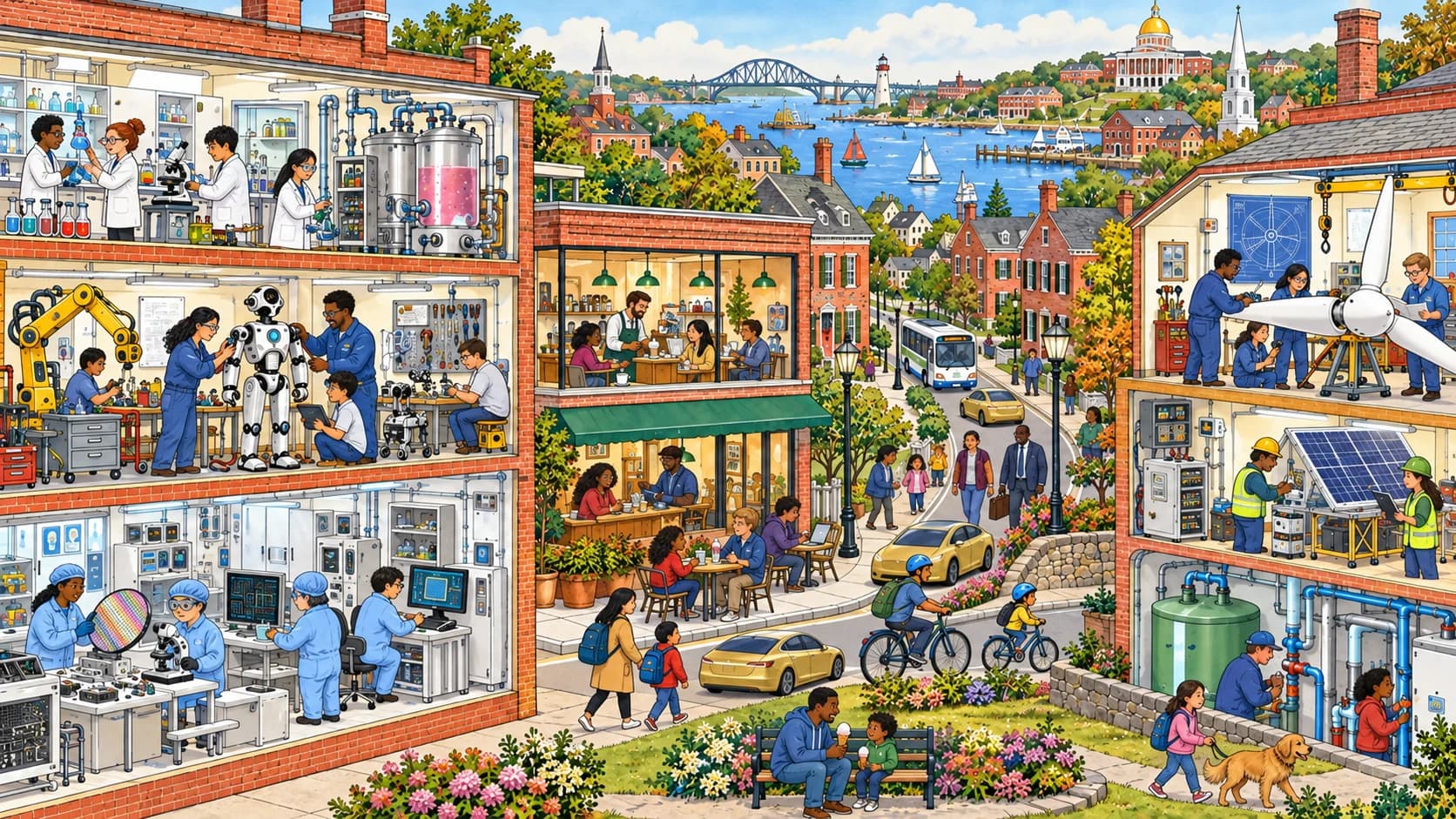
People build medicines, robots, and clean-energy technology in Massachusetts

The opportunity

A picture of 2035

A career changer walks into a free maker space in Springfield, learns to assemble a robot, and writes its software with an AI coding tool. A mentor helps her test it, and a local employer offers paid on-the-job training. Across the state, people build medicines, hardware, energy systems, and businesses with their own hands.

Better in three dimensions

Every initiative has the same test: improve quality, lower prices, and reach more people.

Quality
A better experience, with safer, more reliable results.
Affordability
Lower prices and more value for the money you spend.
Access
More people can use it, wherever they live and whatever their circumstances.

What we can build on

The Commonwealth has the ingredients for this economy: hospitals and biotech, engineering universities, robotics and defense companies, precision manufacturing, and Commonwealth Fusion Systems. AI can accelerate the work across these industries.

The gap to close

An invention does not automatically become a local factory or a good local job. Expensive housing, uncertain approvals, limited industrial space, and missing workforce pathways can send production and talent elsewhere.

People also need somewhere to start. Equipment, software costs, and access to experienced builders shouldn't stand between a citizen and a new career. Put free workshops, practical training, and AI tools within reach across the state.

The work starts here.

Top three key initiatives

Massachusetts teams build medicines, robots, hardware, and clean-energy technology01

Grow the industries of the future

Build Massachusetts' biotech, healthcare, robotics, hardware, energy, and frontier industries as one growth priority. Turn local research into medicines, devices, diagnostics, robots, chips, energy systems, and production lines. Keep the labs, factories, supply chains, and careers here.

Invite hospital systems, life-sciences companies, hardware founders, manufacturers, and qualified energy developers to expand here. Connect industrial sites, reliable power, shared equipment, and first-customer opportunities with training designed around real employer demand. Include smaller suppliers and careers in care, skilled trades, operations, engineering, and research.

Build the workforce and supply chains for fusion, grid hardware, geothermal, storage, quantum computing and sensing, and advanced materials. Quantum isn't a source of electricity; it's part of the instruments, computation, and physical systems we can build. Tie public support to facilities opened, apprentices hired, sustained jobs, wages, and products made here.
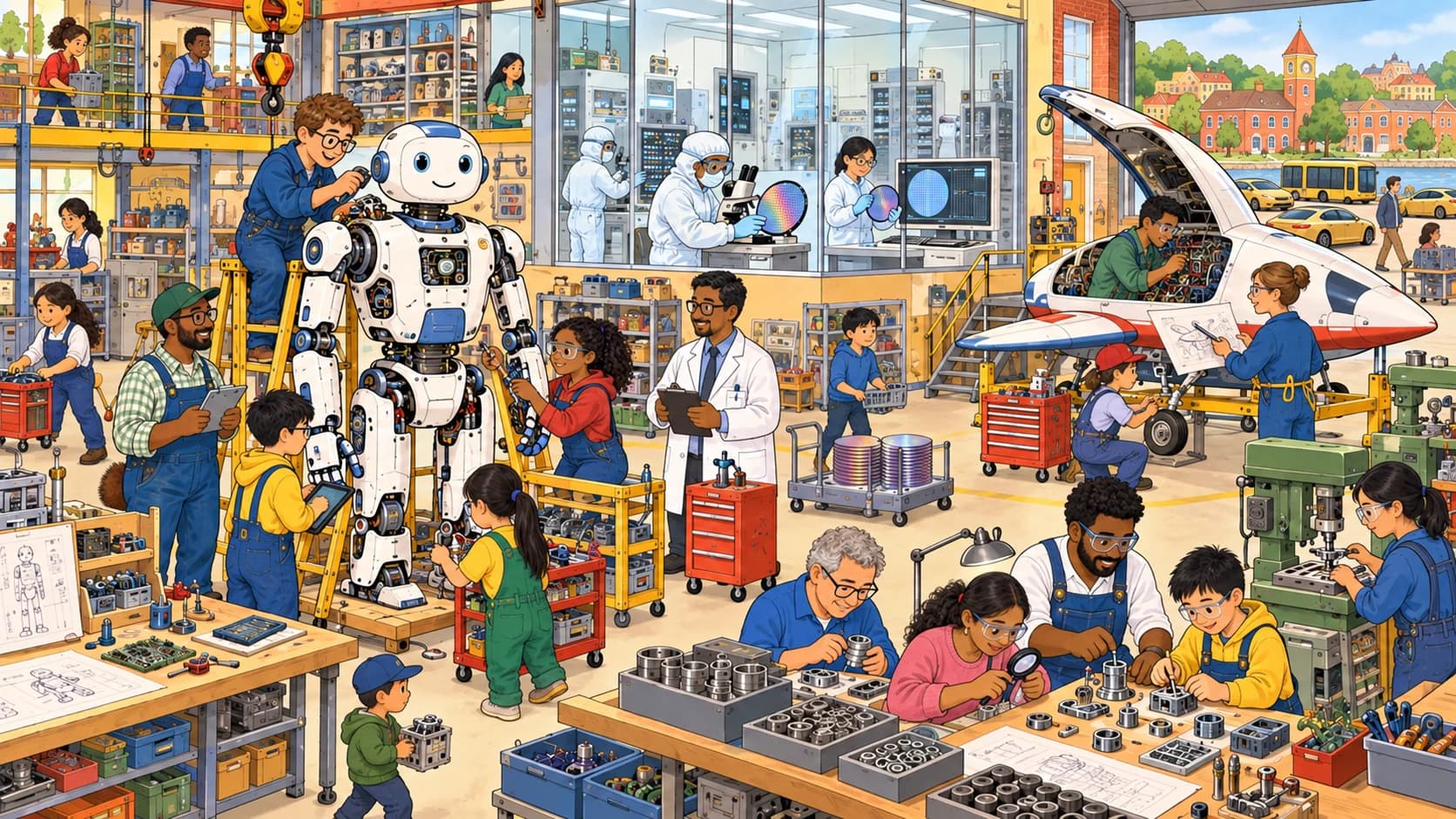
Apprentices and engineers make robotics, chips, and hardware02

Open 100 free maker spaces across Massachusetts

Create 100 maker spaces throughout the state, entirely subsidized and free for citizens. Make them real places where people meet experienced builders, learn with their hands, and build robots, hardware, software, and the things they've always wanted to make. Put workforce retraining at the center of the Jobs plan.

Provide shared tools, prototyping equipment, computers, materials for training projects, and instructors. Teach fabrication, electronics, robotics, coding, and how hardware and software work together. Offer supervised equipment training, accessible facilities, and evening and weekend hours so people can learn while working or raising a family.

Connect the spaces to employers, community colleges, unions, and local builders for practical projects, paid apprenticeships, and on-the-job training in hardware and software. Reuse suitable workshops and buildings where possible. Publish a statewide plan for all 100 locations, their staffing and operating costs, and access across all 14 counties. Fund the spaces so learning and retraining stay free for citizens.

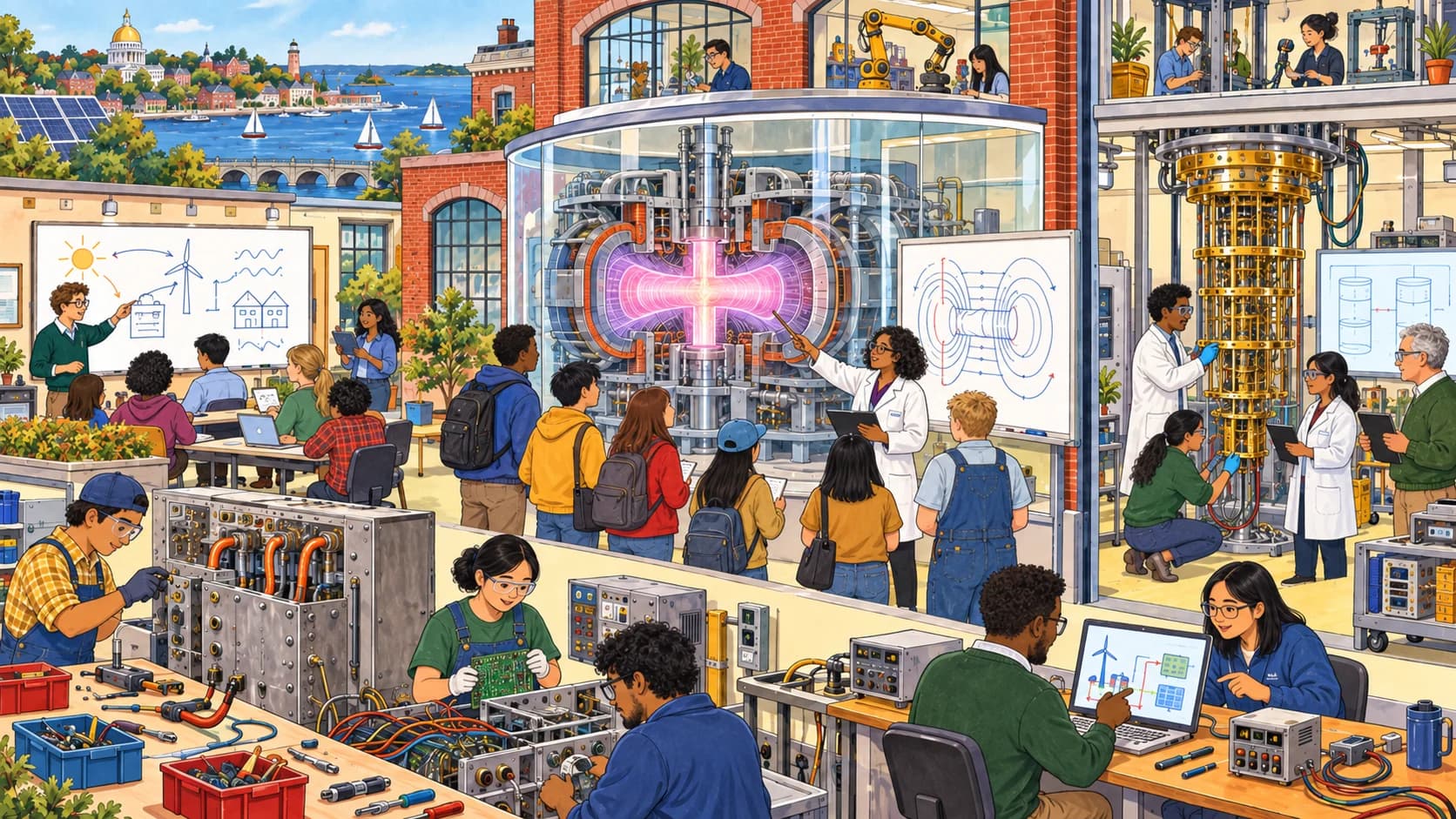
Engineers learn skills in fusion, quantum, and clean-energy workshops03

Give every citizen free AI tools to learn and build

Provide citizens free access to AI tools, including coding tools like Claude Code, Codex, and others. Fund licenses and usage so the price of a tool doesn't decide who gets to learn or build. Offer access at home and through the maker spaces, libraries, and training partners.

Pair the tools with practical instruction. Help people build their first app, write software for a robot, improve a local business, and turn an idea into a working product. Teach them to test what they build, check AI output, and protect personal and business information.

Negotiate competitive access across providers and publish the cost, usage allowances, and training outcomes. Keep room for new tools as they improve. These are proposed publicly funded programs; named products are examples, not announced vendor agreements.

The supporting work

Retrain for a named job and a higher wage

Connect the 100 free maker spaces and free AI tools to training across all 14 counties. Design pathways with employers that identify real demand, and publish placement, retention, and earnings. Help adults learn new skills, change roles, and build businesses.

Open shared infrastructure to builders

Give startups, community colleges, and public-university students practical access to compute, prototyping, cleanrooms, and testing facilities. Use an initial 30% startup-and-student compute allocation as a proposal to negotiate, not a claim that capacity is already available.

One front door, including for international talent

Create a single Growth Office for sites, permitting, workforce help, and financing. Help international founders navigate lawful federal immigration pathways with qualified counsel; Massachusetts cannot issue its own visas.

Bring Main Street into the opportunity

Pay students and career changers to help local businesses use AI, modernize operations, and become suppliers to larger companies. Restaurants, trades, care providers, and small manufacturers should share in the productivity gains.

Keep companies and production here

Use competitive co-investment and expansion support with enforceable local-job and facility commitments. Publish subsidy per sustained job, energy costs, permit times, and clawbacks. Coordinate every major growth district with half-price housing and better mobility.

The path to 2035

Proposed milestones. Expand against evidence, delivery, and public value.

  1. 2027

    Plan 100 maker spaces and launch free AI access

    Publish the statewide plan for 100 fully subsidized maker spaces, including locations, staffing, equipment, operating costs, and proposed funding. Begin at suitable existing workshops, launch free AI-tool access and training, and organize employer compacts across the growth industries.

  2. 2029

    Turn commitments into production

    Open and expand maker spaces against the published statewide plan. Target at least three new or expanded production lines across the growth industries. Pursue 25,000 residents retrained, and test an 80% six-month placement goal against independently reported results.

  3. 2031

    Build careers across the state

    Work toward 100 operating maker spaces with free citizen access across Massachusetts. Pursue 100,000 completed AI or technical retraining pathways cumulatively, adjusted to employer demand. Grow an advanced-manufacturing corridor toward 15,000 sustained jobs, with wages, retention, and local hiring reported.

  4. 2035

    Lead in the world of atoms

    Make Massachusetts a place where discoveries become products, factories, and rising real incomes. A welder, a laboratory technician, a nurse, an engineer, and a founder can all build a good life here. Success is measured in careers and purchasing power, not only valuations.

Questions & answers

Does a focus on atoms mean giving up on AI and software?

AI and software are essential tools across the plan. Free AI access and hands-on software training are major Jobs priorities alongside hardware and the physical industries. Help citizens use both to build products, improve care, generate power, start companies, and earn a better living.

Will government just pick expensive losers?

Fund shared infrastructure and award company support competitively against private commitments and measurable milestones. Publish terms and recover money when obligations are breached. Matching private capital reduces neither technical risk nor the need for public scrutiny.

Will these jobs reach people without advanced degrees?

Build technician, operator, care, construction, and skilled-trade routes alongside engineering and research careers. Employers should specify which roles require degrees and which can be entered through paid training. Connect the age-18 education mission to the actual entry requirements of each job.

How will the maker spaces and AI tools stay free?

Fully subsidize citizen access through a published funding plan covering facilities, equipment, instructors, training materials, software, and ongoing operations. Set the budget and funding sources before committing to sites or contracts. Grow toward 100 spaces with transparent costs and results, and negotiate AI access competitively. This is a proposal, not an already funded program.

Show the results.

The public scorecard

These are the measures we would publish to judge progress.

  • Sustained jobs by industry and region
  • Inflation-adjusted earnings
  • Local production
  • Apprenticeship conversions
  • Worker retention
  • Public subsidy per sustained job
  • Maker spaces open toward the 100-space goal
  • Free citizen access and geographic coverage
  • Hands-on training completions and job placements
  • Citizens using free AI tools
  • Cost per learner and training outcome

The team

Announcing in 2028

One team lead. Eleven support team members. We’ll unveil the jobs team in 2028.

  1. Team lead — to be announced in 2028

  2. Support team member 1 — to be announced in 2028

  3. Support team member 2 — to be announced in 2028

  4. Support team member 3 — to be announced in 2028

  5. Support team member 4 — to be announced in 2028

  6. Support team member 5 — to be announced in 2028

  7. Support team member 6 — to be announced in 2028

  8. Support team member 7 — to be announced in 2028

  9. Support team member 8 — to be announced in 2028

  10. Support team member 9 — to be announced in 2028

  11. Support team member 10 — to be announced in 2028

  12. Support team member 11 — to be announced in 2028

People are already building.

Work already underway

Interesting initiatives from state government, public institutions, companies, and nonprofits working on jobs in Massachusetts.

Examples to learn from, not an exhaustive list or an announcement of partnerships with Massachusetts 2035. Sources reviewed October 22, 2026.

Jobs — Massachusetts 2035 | Mass 2035